February 11, 2026
According to the World Health Organization (WHO), millions of new cases of syphilis are reported worldwide every year, making the problem urgent for the health system.
According to the CDC, syphilis has been steadily increasing since 2000 (31.6 per 100,000 population) and in 2023 (209.2 per 100,000 population). There has also been an increase in congenital syphilis from 2.2 in 2020 to 9.9 in 2023. The agency notes that the increase in the number of infections in the United States is taking place against the background of a reduction in funding for local health facilities and an increase in the spread of infection due to increased drug use and unprotected sex.
According to the ECDC, the situation is the same in a number of European countries, with an increase in syphilis from 5.6 in 2020 to 9.9 in 2023. Several factors contributed to the growth of syphilis in Europe: antimicrobial resistance, social isolation during the COVID-19 pandemic and the subsequent "rebound effect" after restrictions were lifted led to a sharp increase in the incidence, in addition, the pandemic worsened the situation by disrupting the work of STI testing and treatment services.
In the Republic of Kazakhstan, there is an annual decrease in the incidence of syphilis, at a time when there is an increase in the world, this raises doubts about the correctness of statistical data among the general population. Private medical organizations do not provide reports on STIs and, accordingly, the general statistics include only appeals to skin and venereological organizations.
What is syphilis?
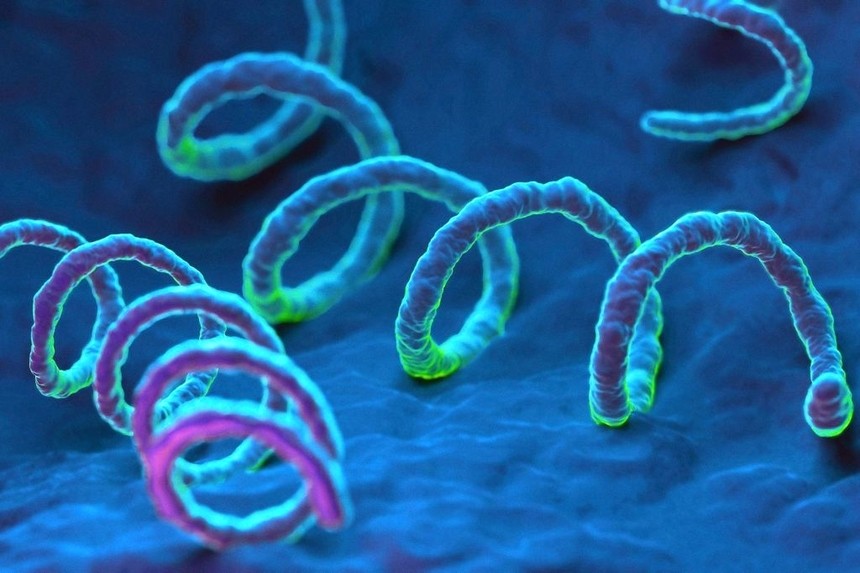
Syphilis is a chronic infectious disease caused by the bacterium Treponema pallidum. The disease develops in several stages and, if left untreated, can lead to serious complications, including damage to internal organs, the nervous system, and the brain.
Treponema pallidum, the bacterium that causes syphilis, exists only in humans. Unlike other treponema bacteria, it can enter the body through micro-damage to the mucous membranes of the genitals, mouth or anus during unprotected sexual intercourse.
Syphilis can be easily transmitted:
- during oral, vaginal and anal sex (sexual intercourse);
- in close contact with the patient's body fluids (through kisses, general hygiene items, medical instruments with non-observance of sterility), (household contact is extremely rare, but possible);
- from mother to child during pregnancy through the placenta (vertical pathway (congenital syphilis));
- during organ transplantation or blood transfusion, if the donor is infected and has not undergone a proper examination (now this route is practically excluded due to strict control of donated blood) (transplant and blood transfusion route).
However, it is impossible to contract syphilis through toilet seats, door handles, bathtubs, swimming pools, jacuzzis, shared dishes, or shared clothing. This is due to the fact that the bacterium dies very quickly outside the body.
Methods of prevention and treatment
Syphilis can be successfully treated with antibiotics, but timely detection of the disease remains key. The main preventive measures include:
- The use of condoms at every sexual encounter.
- Regular testing for sexually transmitted infections (STIs).
- Informing about the symptoms of the disease and contacting a doctor if an infection is suspected.
Syphilis is an infectious disease that requires a professional medical approach. However, many people, when faced with symptoms or learning about the diagnosis, try to treat themselves, which can lead to serious consequences.
Why is self-treatment of syphilis dangerous?
- Wrong choice of drugs.
- Some patients take broad-spectrum antibiotics, hoping to cure the infection. However, Treponema pallidum (the causative agent of syphilis) It is sensitive only to certain types of antibiotics, and the wrong choice of medication may not only destroy the bacteria, but also complicate further treatment. In addition, in recent years, there has been a development of resistance to certain antibacterial drugs.
- Insufficient dosage or incorrect course.
- Even if a person is taking a suitable antibiotic, self–treatment is often accompanied by a violation of the intake regimen - too short a course or insufficient dosage. This leads to suppression of symptoms, but does not completely destroy the infection, which can cause the disease to become latent.
- The risk of chronicity and severe complications.
- Without professional treatment, syphilis goes through several stages: primary, secondary, and tertiary. In its later stages, the disease can affect internal organs, the nervous system, and the brain, leading to blindness, paralysis, mental disorders, and even death.
- A false sense of recovery.
- The symptoms of syphilis may disappear on their own, but this does not mean that the disease has passed. Without treatment, the infection continues to spread in the body, causing irreparable harm to health.
- Transmission of infection to other people.
- A person who has not completed a full course of treatment remains a carrier of the infection and can infect partners without even knowing it.
How to treat syphilis correctly?
- Consult a dermatovenerologist for diagnosis.
- Complete a full course of treatment under the supervision of a specialist.
- Avoid sexual contact until the end of therapy and negative tests are obtained.
- Notify sexual partners so that they can also be examined.
Even after a course of therapy, monitoring is necessary for 12-24 months to make sure that the infection is completely cured.
If you notice an ulcer, erosion or other rashes (papillomas, warts) in the genital area, enlarged lymph nodes in the groin (more often), a spotted rash on the trunk or on the palms and soles, you should immediately consult a dermatovenerologist.
Most often, latent forms of syphilis are registered, in which there are no manifestations and such forms are detected during medical examinations, during tests for hospitalization, etc.
Self–treatment of syphilis is a health risk that can lead to severe and irreversible consequences. Only timely medical care and strict control of treatment will help to completely get rid of the infection and prevent complications.
https://www.cdc.gov/sti-statistics/annual/index.html
https://www.rbc.ru/society/31/01/2024/65b9ff289a79474abcaa94bb?utm_source=chatgpt.com
https://www.ecdc.europa.eu/sites/default/files/documents/SYPH_AER_2023_Report.pdf
https://www.firstderm.com/surge-in-sexually-transmitted-infections-across-europe/?utm_source=chatgpt.com
- Utegenova,
venereologist KNTSDIZ
all news »