December 3, 2025
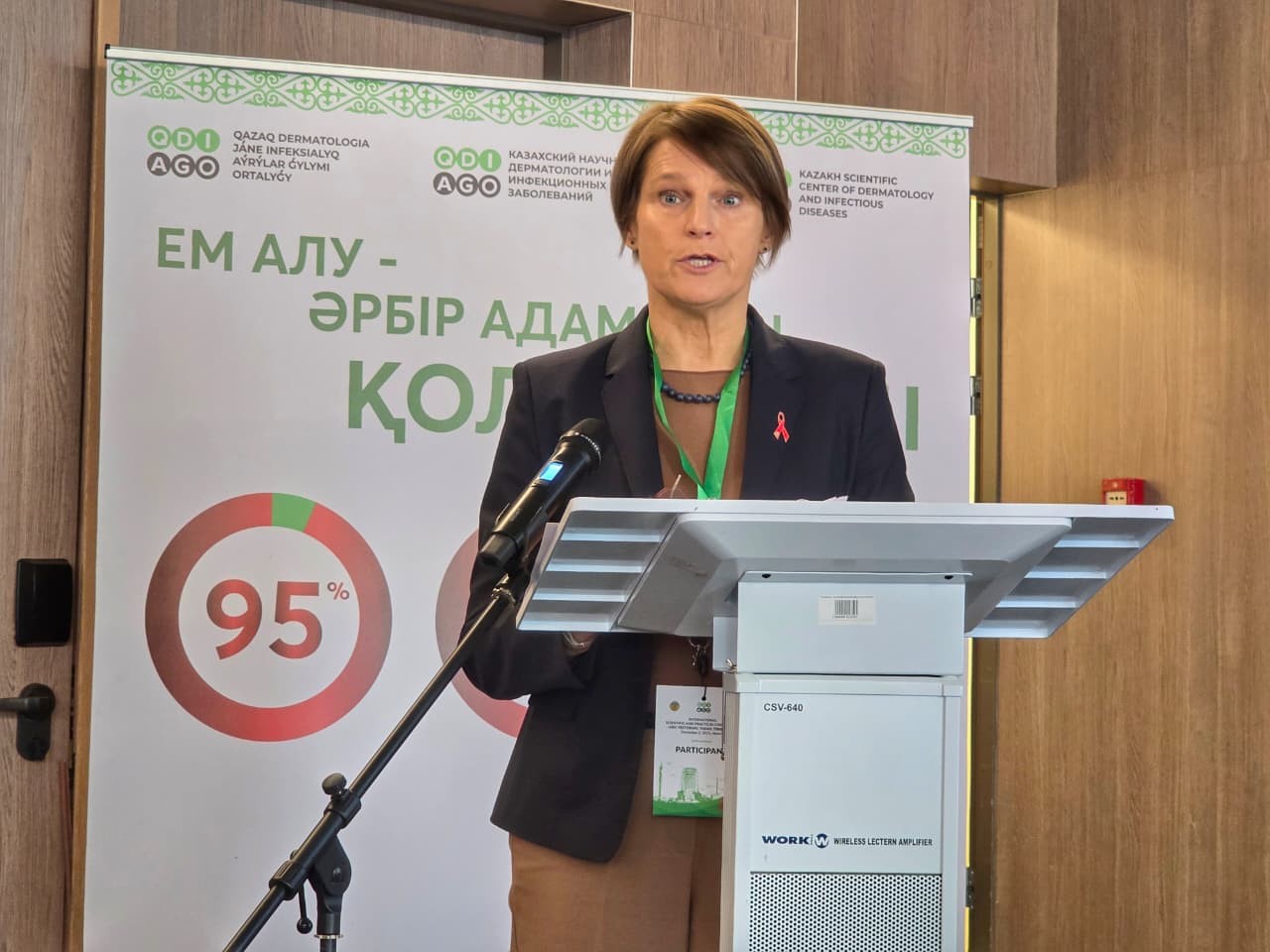
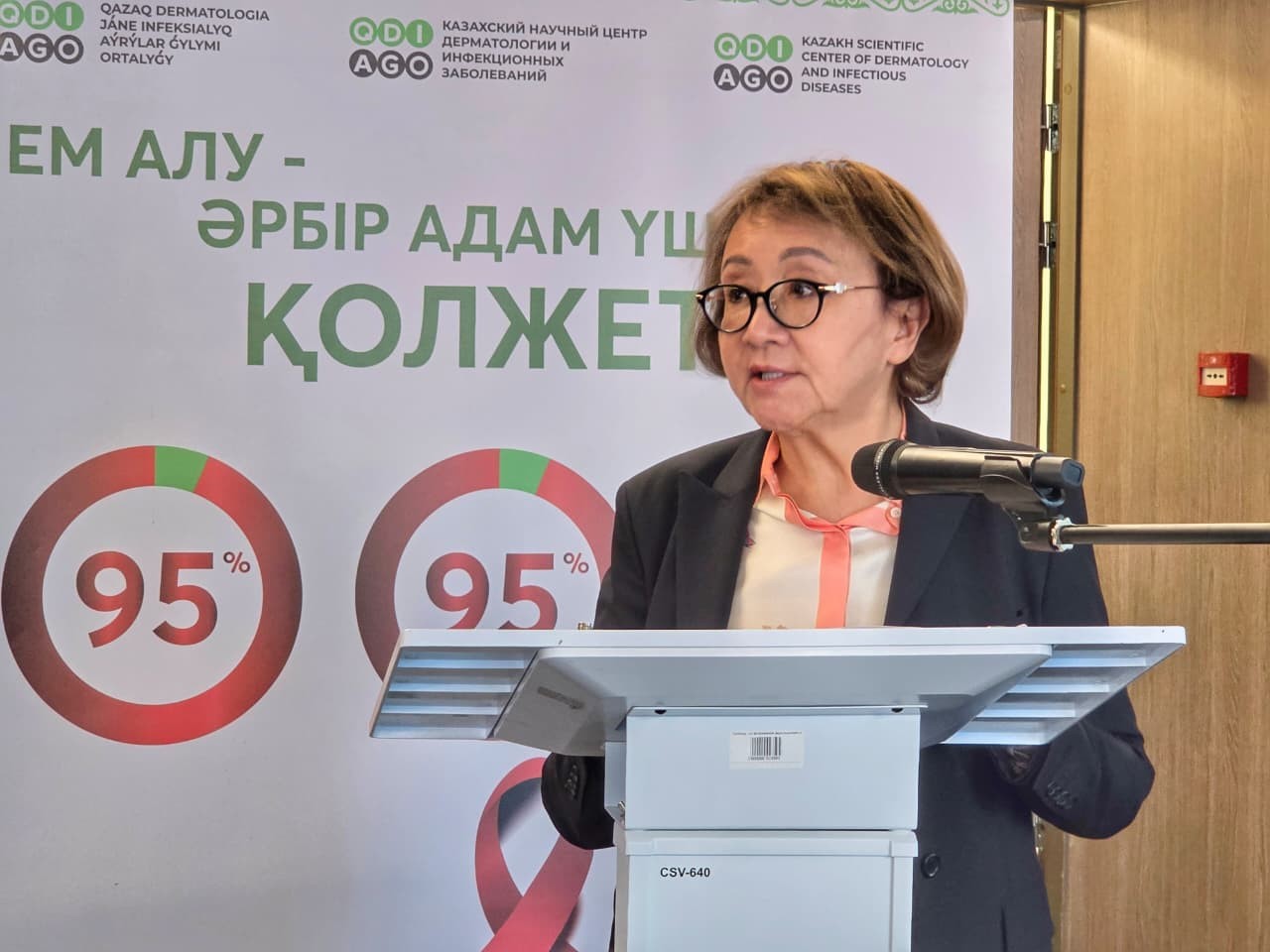
On 2 December, Almaty hosted the International Scientific and Practical Conference “HIV: Yesterday, Today, and Tomorrow.”
The conference was organized as part of an information campaign dedicated to World AIDS Day, observed on 1 December, under the theme “From Challenges to Transformations in the HIV Response.”
The organizers included the Ministry of Health of the Republic of Kazakhstan, the Kazakh Scientific Center for Dermatology and Infectious Diseases (KSCID), and the Public Association “Society of Dermatovenereologists, Dermatocosmetologists and Leprologists.” The event marked an important step towards improving modern approaches to HIV prevention and the prevention of sexually transmitted infections (STIs).
Participants included representatives of the Ministry of Health, governmental and non-governmental organizations, and international partners — the World Health Organization (WHO), UNAIDS, CDC, and the Global Fund to Fight AIDS, Tuberculosis and Malaria.
“We have achieved sustainable improvement in key indicators related to the HIV epidemic in the country. AIDS-related mortality has decreased significantly — from 11 per 1,000 people living with HIV in 2016 to 3.2 in 2024. Over the past five years, the rate of vertical transmission has dropped almost threefold, from 4.1% to 1.2%. Treatment coverage has nearly doubled: in 2016, 43% of people living with HIV received antiretroviral therapy (ART), and by 2025 this figure has reached 92%. Treatment effectiveness has also increased from 59% to 93%, which reduces the risk of transmission and improves the quality of life of people living with HIV,” — said Roza Kuanyshbekova, Director of KSCID.
As of early 2025, 36,767 people living with HIV who are aware of their HIV status were officially registered in Kazakhstan. In recent years, there has been a clear trend toward a slowdown in new registrations. Kazakhstan has implemented all 12 prevention programmes recommended by WHO, and in 2025 adopted the Standard for the Organization of HIV Care Delivery.
The conference served as a productive platform for sharing experiences and best practices in HIV prevention and the control of sexually transmitted infections. The forum addressed innovative approaches to HIV testing and treatment, the use of social marketing in HIV prevention, and the results of recent research.
Participants emphasized that to further stabilize the situation, it is essential to strengthen the resilience of the HIV response, develop effective interventions to combat stigma affecting key populations, and improve prevention efforts.
Early diagnosis was identified as a key priority for preventing and treating HIV infection. To enhance these efforts, effective and sustained public awareness and education are needed to help people avoid possible infection and promote a culture of responsible health behavior for themselves and others. Expanding prevention initiatives in youth health centres, primary health care, and private medical facilities is necessary. Regular HIV testing should become a norm of life, especially among young people.



all news »