November 27, 2025
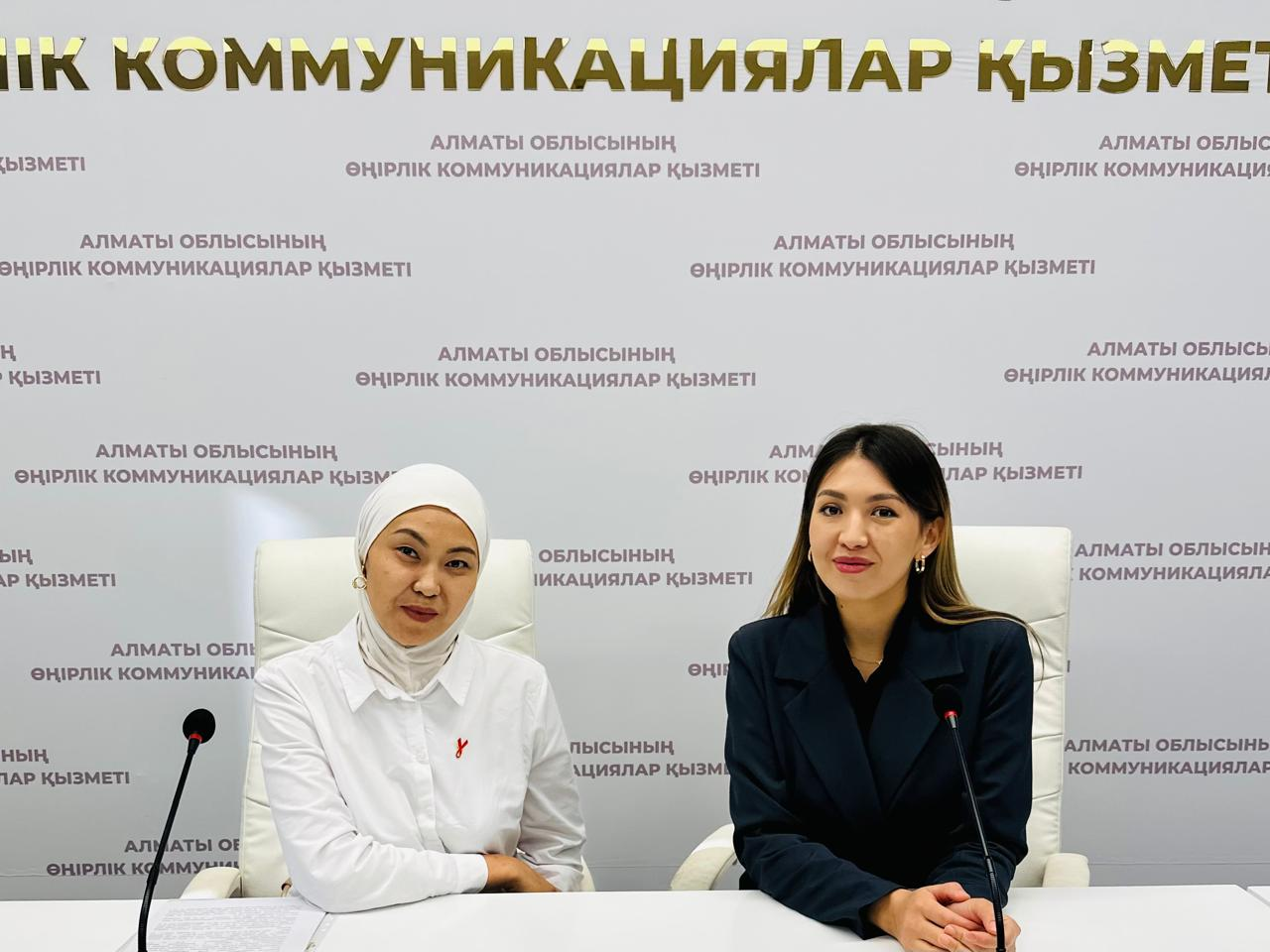
A press conference dedicated to World AIDS Day was held at the Regional Communications Service of Almaty Region. The briefing addressed the HIV situation in the region, the outcomes of prevention efforts, and the level of public participation in testing. Specialists also presented concrete data on activities conducted during the awareness month.
Saule Kozhalimova, Head of the Organizational and Methodological Department at the Almaty Regional AIDS Centre, highlighted a decline in HIV indicators in the region.
“As of the first nine months of 2025, the HIV incidence rate stood at 13.3 per 100,000 population. Compared with the same period last year, the number of new cases decreased by 38. Access to testing has expanded, and population coverage through screening has reached 13.5 percent,” said Ms. Kozhalimova.
Lazzat Abdukarimova, Head of the Prevention Department, emphasized the particular importance of awareness-raising and educational activities.
“HIV remains a significant risk factor for everyone. Therefore, we are strengthening our prevention work with young people, educational institutions, military personnel and key populations. Reducing stigma and fear in society remains one of our top priorities,” she noted.
This year, 22 lectures were conducted for business representatives and police officers, and four round tables were held in educational institutions. District hospitals organized open-door days, while colleges and schools hosted 25 training sessions and seminars. Free HIV testing was offered to the public, along with interactive sessions and awareness campaigns targeting youth.
According to experts, low awareness and insufficient motivation to undergo testing remain major challenges in HIV prevention. Therefore, the region will continue strengthening information campaigns, expanding access to health services and disseminating youth-oriented materials through digital platforms.
Speakers underlined that accurate information and personal responsibility are key tools in preventing HIV. Achieving sustainable results is only possible through the joint efforts of the entire society.
all news »