August 24, 2026
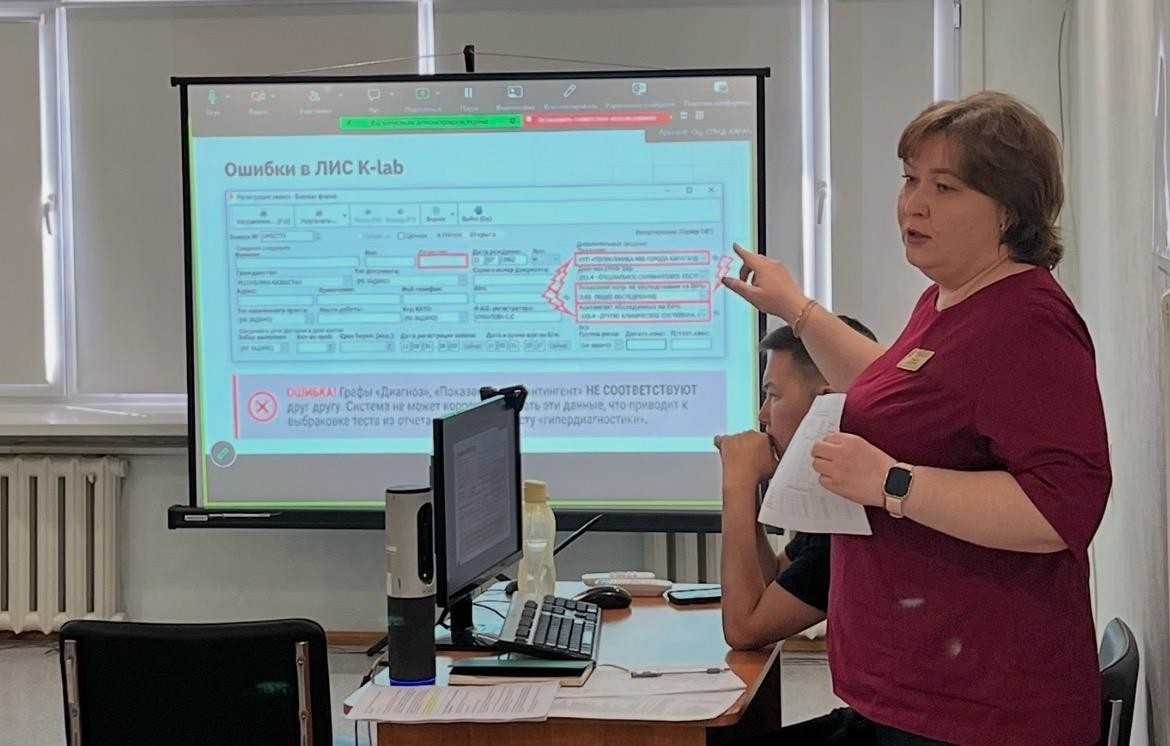
A workshop-meeting for deputy directors of primary health care (PHC) organizations in the region was held at the Karaganda Regional Center for the Prevention and Control of AIDS. The main topic of the meeting was the early detection of HIV infection.
Opening the meeting, B.Zh. Sagimbayev, Director of the Karaganda Regional AIDS Center, emphasized that timely diagnosis of HIV is one of the healthcare system's key priorities. The earlier the disease is detected, the sooner the patient can start therapy and reduce the risk of further HIV transmission. Clear coordination between PHC organizations and the AIDS service plays an essential role in this process.
O.Yu. Mokrousova, Head of the Epidemiological Department, presented data on the epidemiological situation for the first 7 months of 2026, analyzed HIV testing coverage based on clinical indications, and addressed issues regarding patient routing within PHC. Her report also highlighted that accurate coding in primary care is crucial for epidemiological analysis.
O.I. Orlova, Acting Head of the Treatment and Prophylactic Department, focused on the clinical indications for HIV screening. In its early stages, HIV is often asymptomatic, and its manifestations can resemble common conditions such as acute respiratory viral infections (ARVI), intestinal infections, and others. Therefore, in cases of prolonged, recurrent, or atypical symptoms, primary care physicians must remain vigilant and consider HIV as part of differential diagnosis.
At the same time, testing should not be limited solely to cases with obvious clinical indications or preparation for scheduled surgeries. Any patient visit to a medical facility can serve as an opportunity for timely HIV detection.
Participants also separately discussed the significance of the pre-analytical phase, noting specifically that proper temperature storage conditions and rapid logistics of biological materials are critical for reliable results.
To reinforce the material, guidelines on diagnosing HIV and managing patients with HIV/HCV co-infections were provided. The review of real clinical cases made it possible to evaluate the consequences of late detection of the infection.
At the end of the workshop, specialists from the AIDS Center answered questions from the audience. The main conclusion of the meeting is unequivocal: it is necessary to increase population screening coverage so that every primary care physician understands that it is better to detect the disease in a timely manner than to treat it at an advanced stage.

all news »